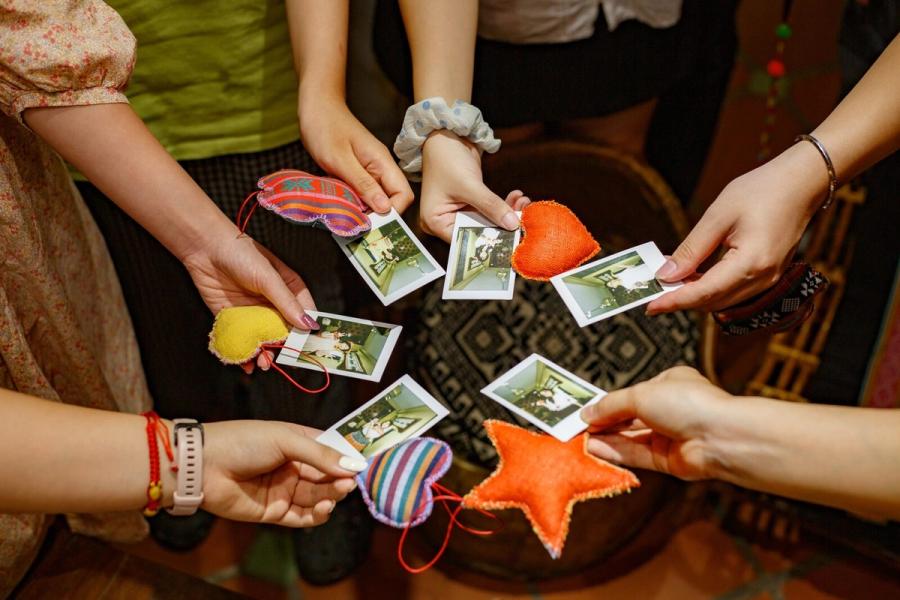
“Thổ cẩm kể” exhibition: brocade patterns of ethnic minority peoples
An online exhibition of ethnic minority brocade patterns by Chie in May 2021. Each pattern tells a story from the Thai, Lao and H’mong peoples.
- When
- Where
- Online
- Format
- Online
- Organiser
- Chie Dù Pù Dù Pà Social Enterprise

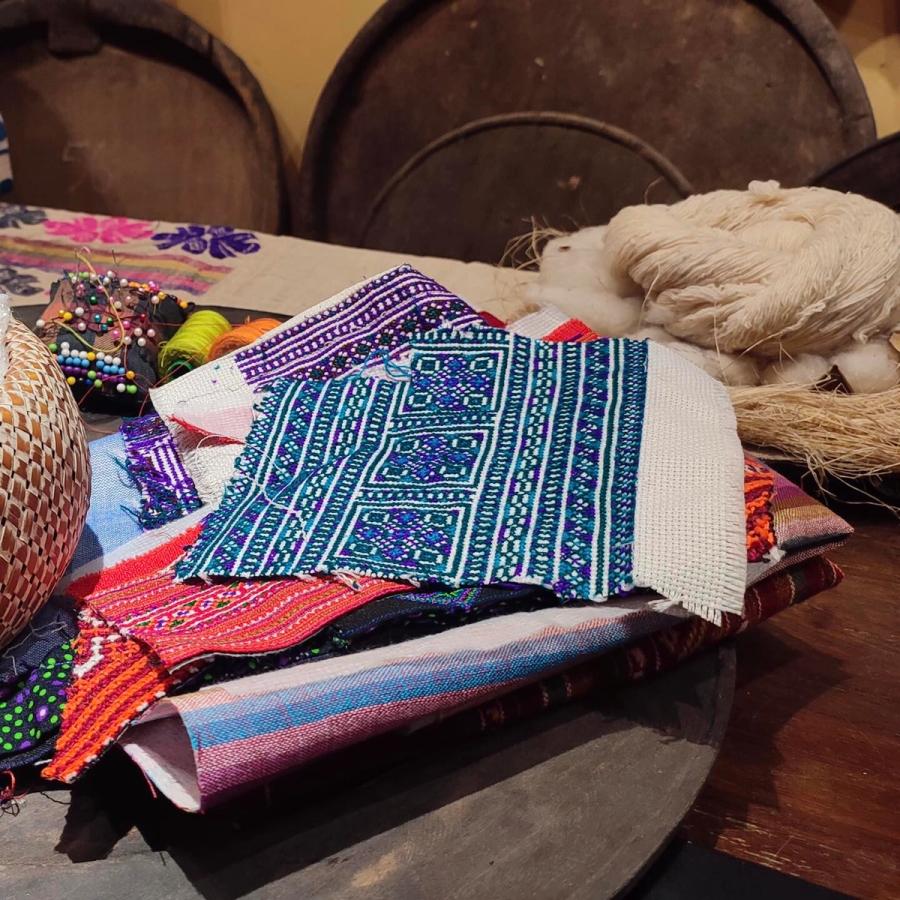
“Thổ cẩm kể” (“Brocade Tells Stories”) was an exhibition of ethnic minority brocade patterns organised by Chie Dù Pù Dù Pà in May 2021. It showed richly patterned cloths woven by hand with great care, so that visitors could better understand what the patterns mean and how they live in everyday ethnic minority culture.
With the pandemic still disrupting daily life, the exhibition was held online from 23 to 29 May 2021. Each pattern was presented together with the story behind it, just as the villagers tell it to one another.
The Thai “short-tailed dragon” pattern
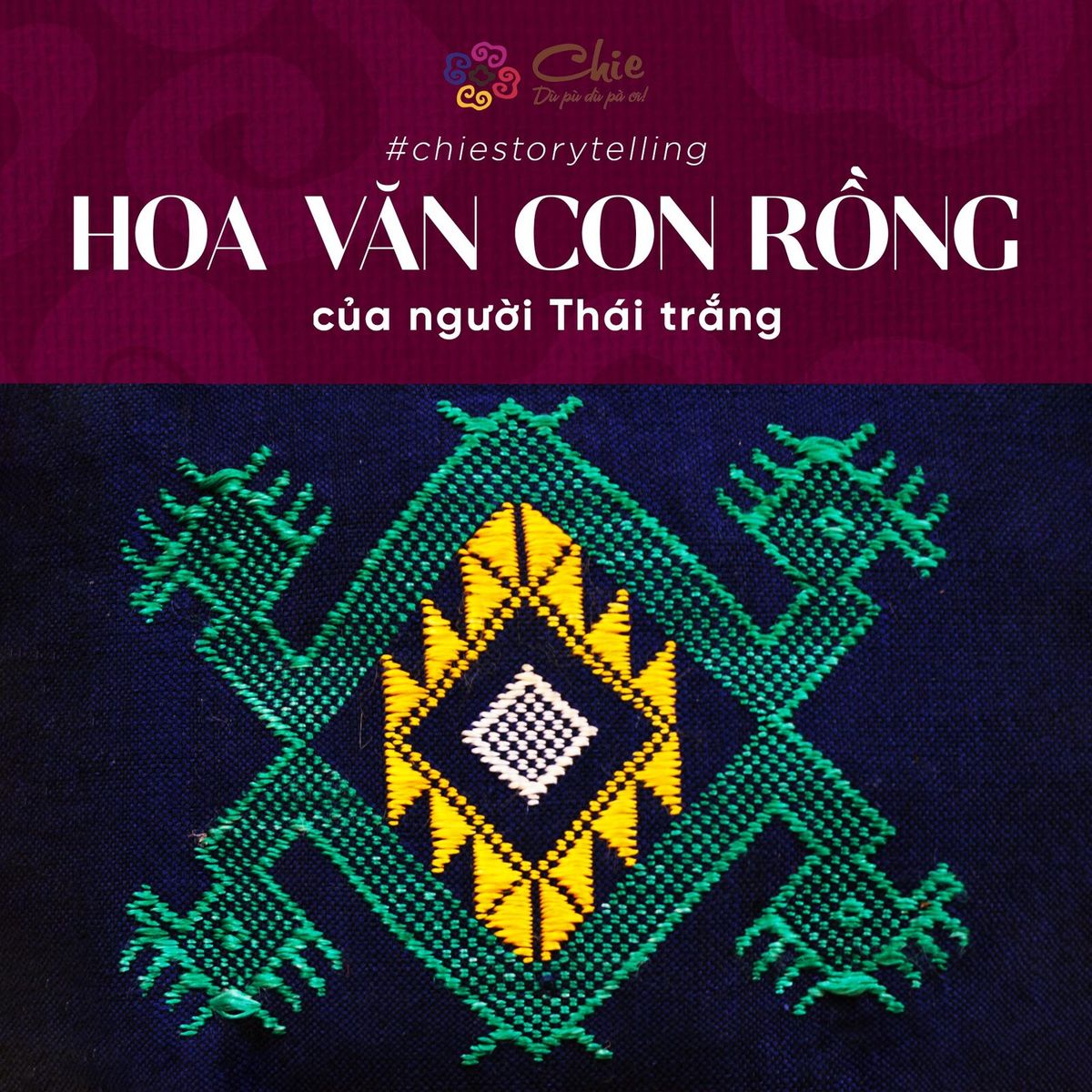
The story goes that a poor farming couple with no children found an egg by a stream. It hatched into a little dragon, whom they loved as their own child. One day the farmer accidentally cut off its tail with his hoe. When enemies invaded, the dragon asked its parents to let it go and fight, and begged them never to speak its name, but they missed it so much that they said it aloud. The enemy found out and killed the dragon. Ever since, in every flood season, the dragon sends great shoals of fish to its parents as a sign of filial love.
The Thai people of Mai Chau pass this story on and weave the short-tailed dragon, usually on the waistband of women’s skirts. The stylised, symmetrical dragon recalls the devoted dragon boy.
The Lao “red-necked dragon” pattern
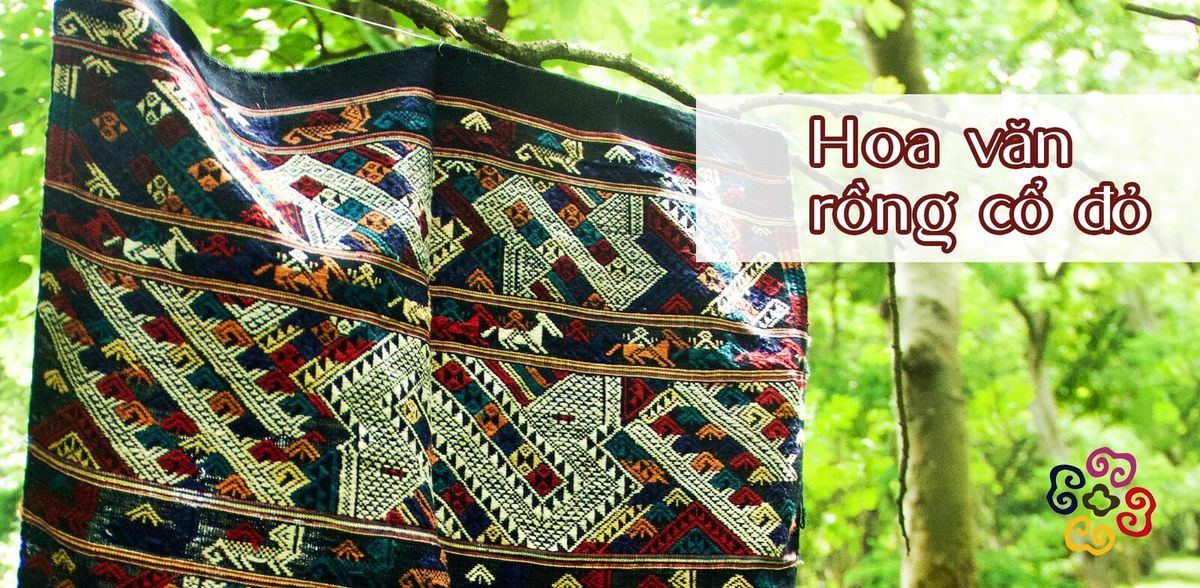
Long ago there were two orphaned siblings. One day the elder brother’s wife found a large dragon egg by the stream, boiled it with duck eggs and told the younger sister to eat the big one. Seeing her brother work so hard, the sister gave him the big egg. Afterwards he was thirsty and could not drink enough. He went down to the stream, did not want to return, asked his sister to tie a red thread around his neck so they could recognise each other, and disappeared. At the festival, the sister brought rice and water to the stream and called for him. She saw only a dragon with a red thread around its neck and knew it was her brother. Grown up and missing him, she wove the red-necked dragon.
Since then the Lao have used the dragon pattern to remember the bond between siblings. It used to be woven in white on black; today the Lao also add green and decorative flowers and leaves.
The Lao “tiger rider” pattern
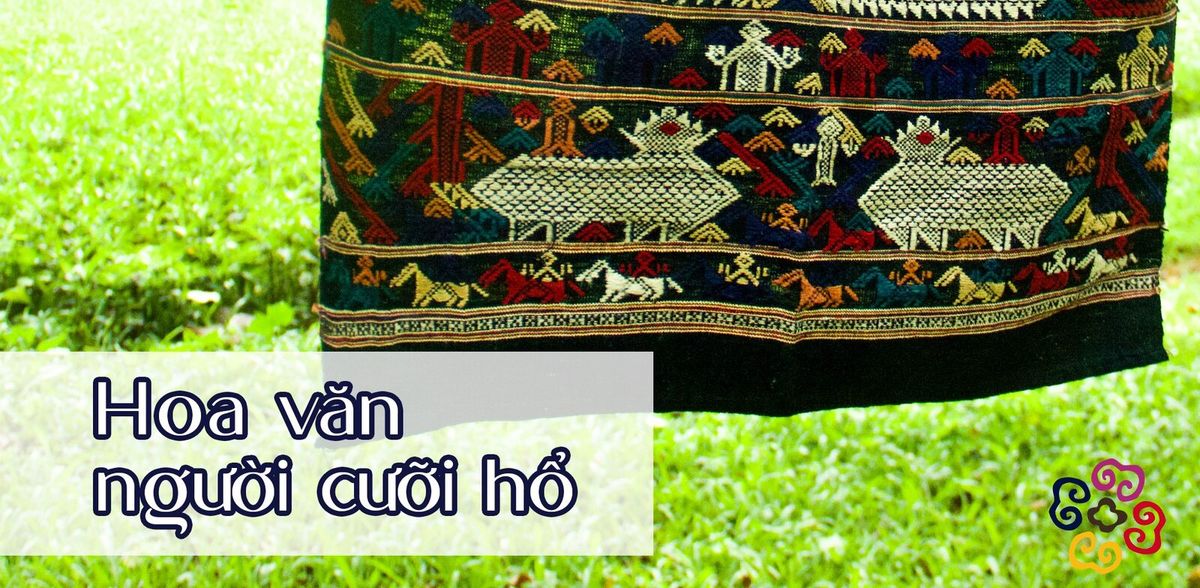
The tiger-rider pattern is often seen on skirt hems and tablecloths and is tied to two small stories. For the Luong clan, the tiger is sacred and is called “Grandfather Tiger”. If they find a dead tiger, they cover it with white cloth and mourn as they would for a relative. The tiger pattern reminds everyone not to harm him. Other clans weave similar patterns to remind their children of the taboos around marrying into the Luong clan.
The second story tells of a poor mother who went into the forest for firewood, collapsed from exhaustion and died. Her son, mistreated by his stepmother, wandered into the forest and met a tiger, who was in fact his late mother in another form. The tiger-mother found food and clothes for him, and he lived happily in her care.
From these stories, Chie sees that for the Lao people nature is a close friend woven into daily life. They love, respect and live in harmony with it.
The H’mong sun pattern
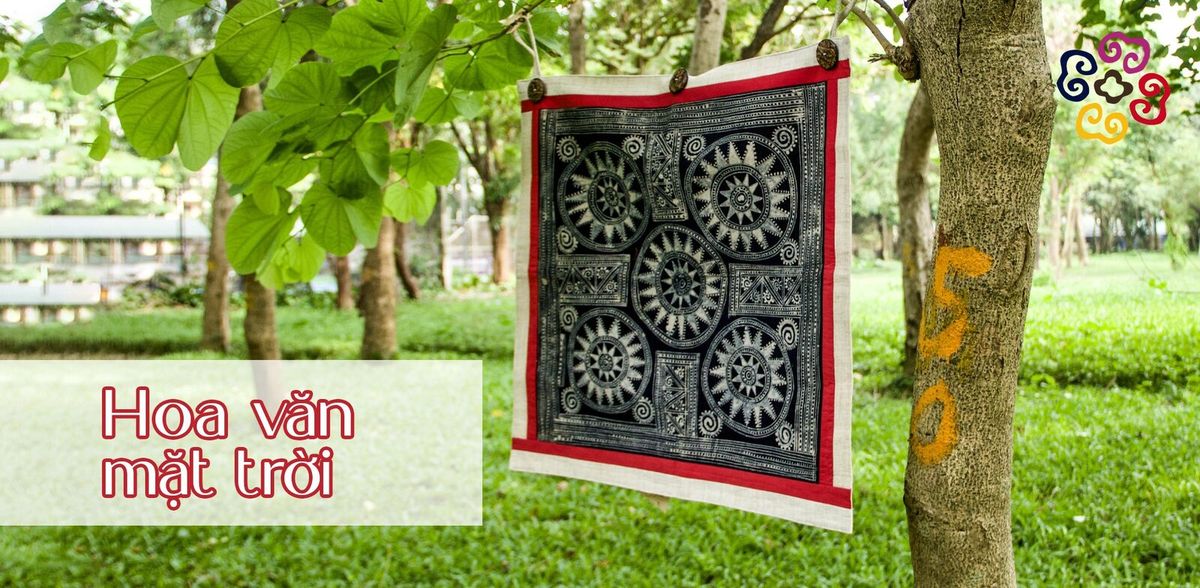
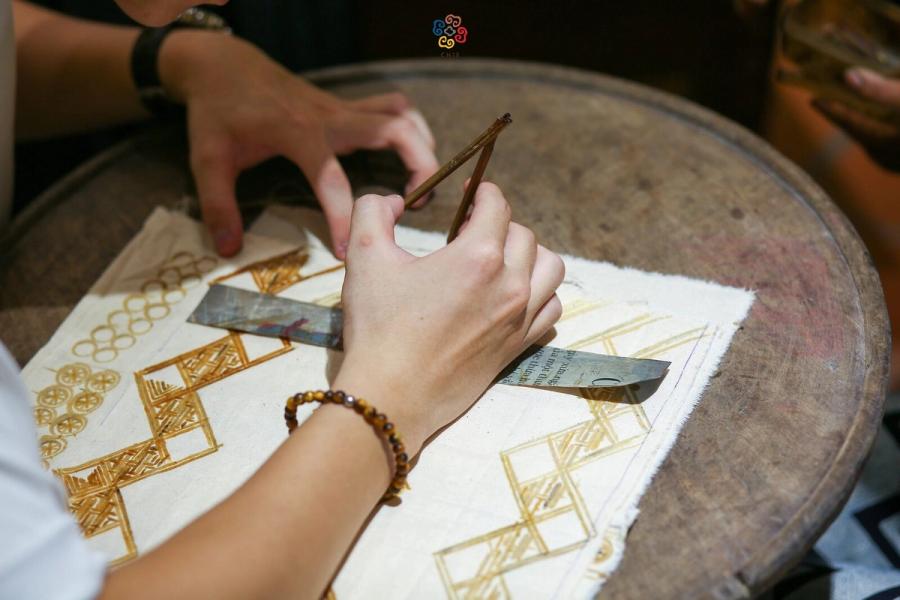
The sun pattern is usually embroidered or drawn in beeswax on baby carriers and children’s hats. The H’mong believe the sun brings light to the world and is a great source of strength that drives away evil spirits and brings a peaceful life.
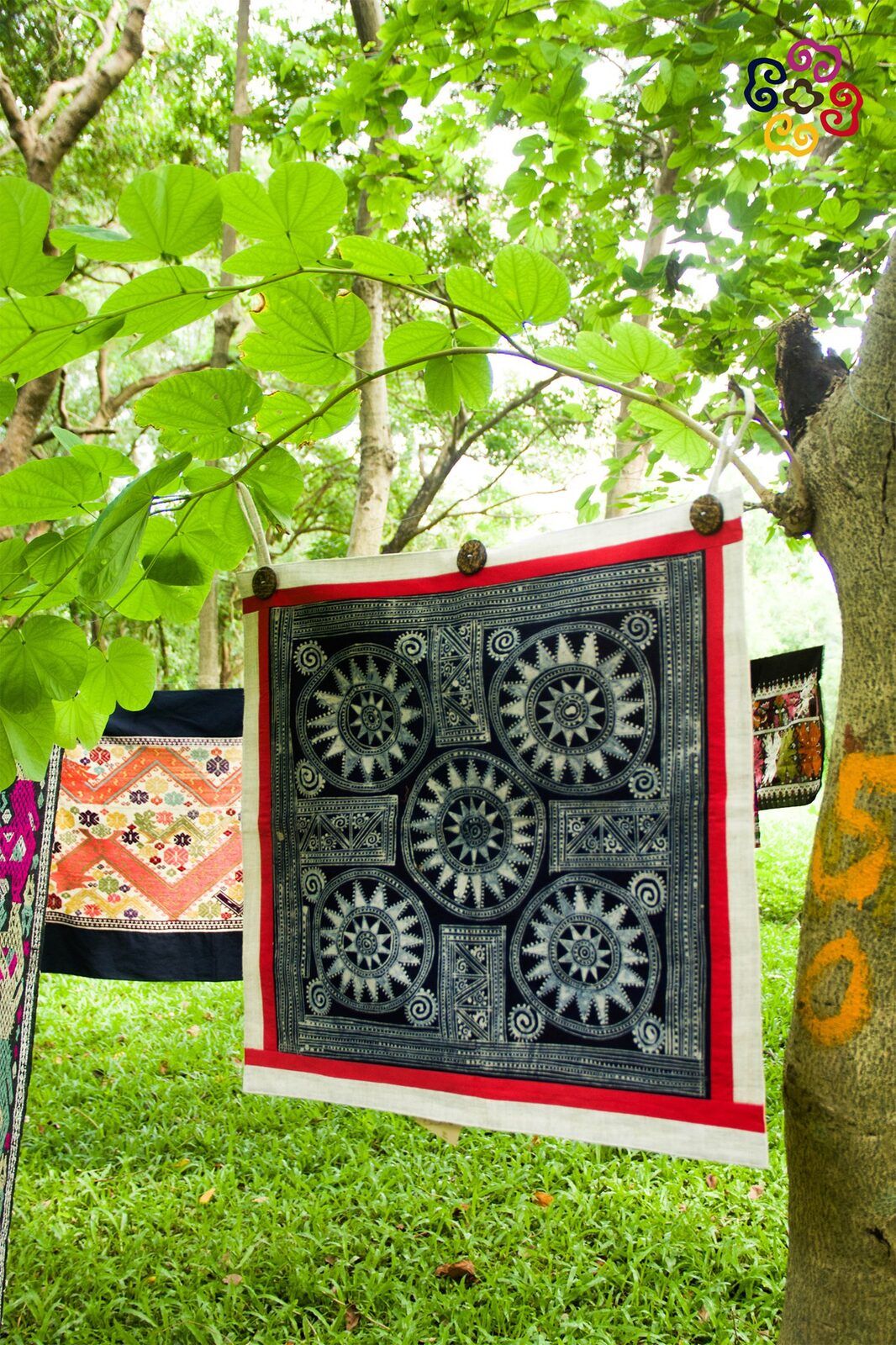
For women the sun matters even more. When a mother carries her child on her back, she shields the baby in front, while the sun embroidered on the carrier behind keeps evil away and protects her little one.
More cloths from the exhibition
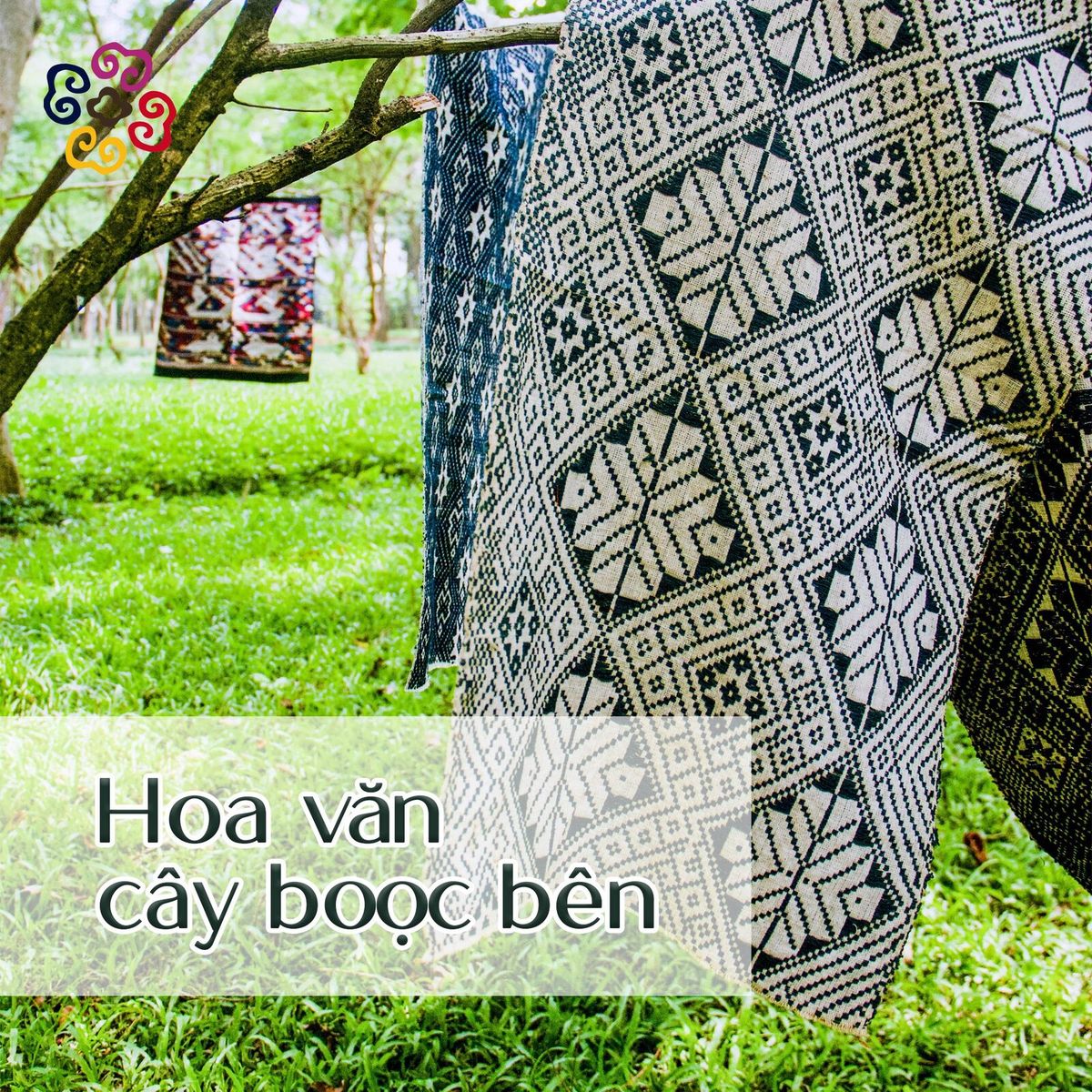
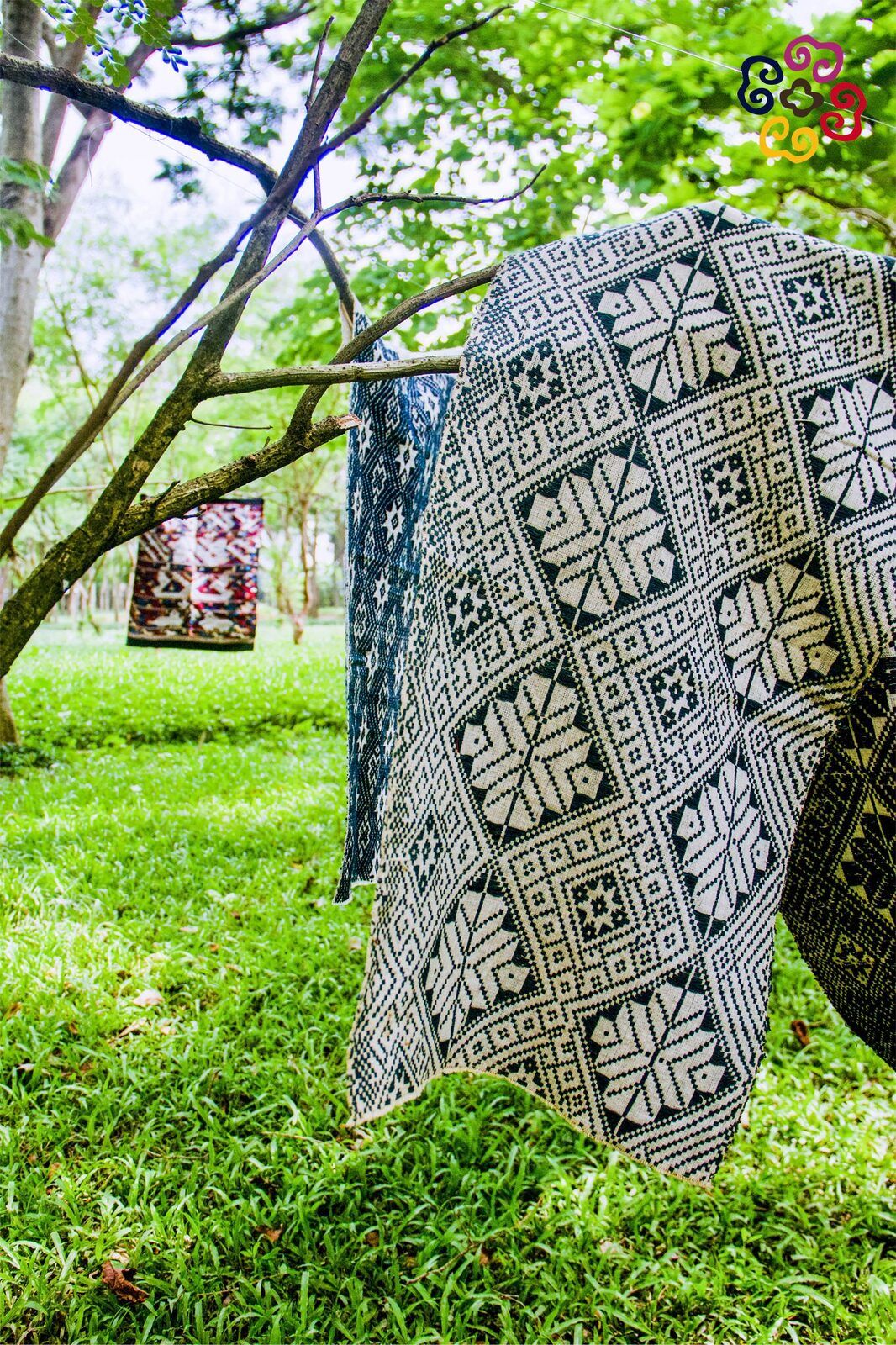
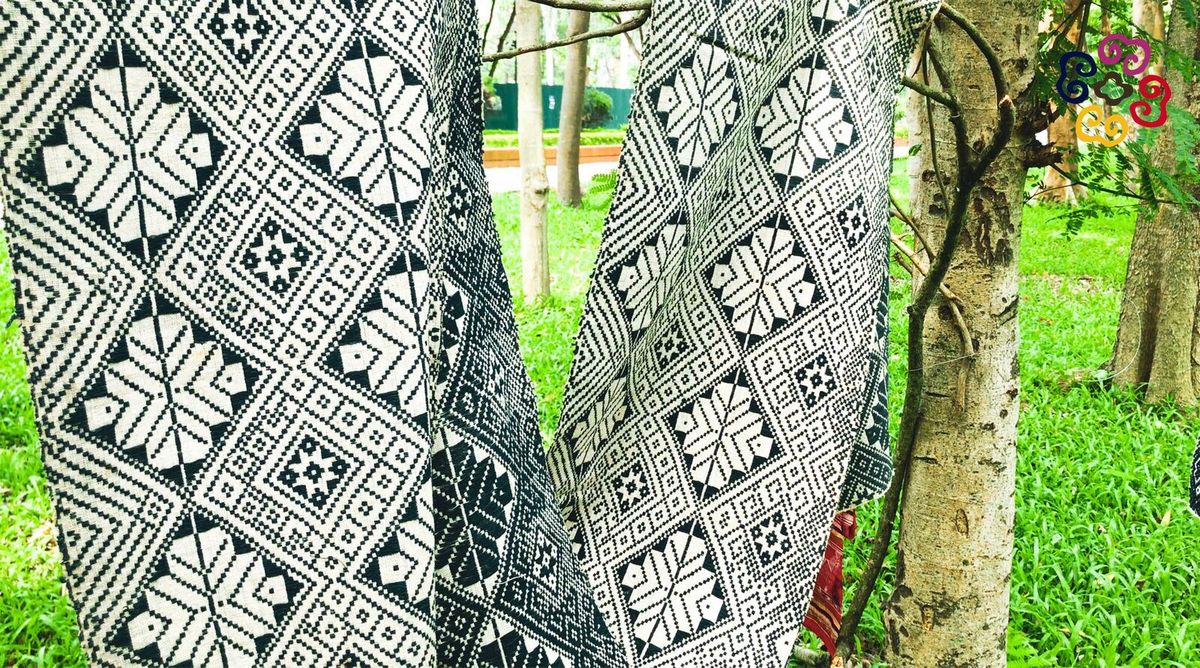
The cloths were hung among garden trees so that visitors could admire the patterns from many angles.
Closing the exhibition
Because visitors could not come in person to touch the cloth and hear the stories, Chie made an exhibition video that sums up the patterns it had presented. The exhibition closed on 29 May 2021. Chie warmly thanks everyone who followed along and hopes to sit down together again once the pandemic has passed.
Translated from the Vietnamese original.
This event has taken place. Follow Chie for the next event: